
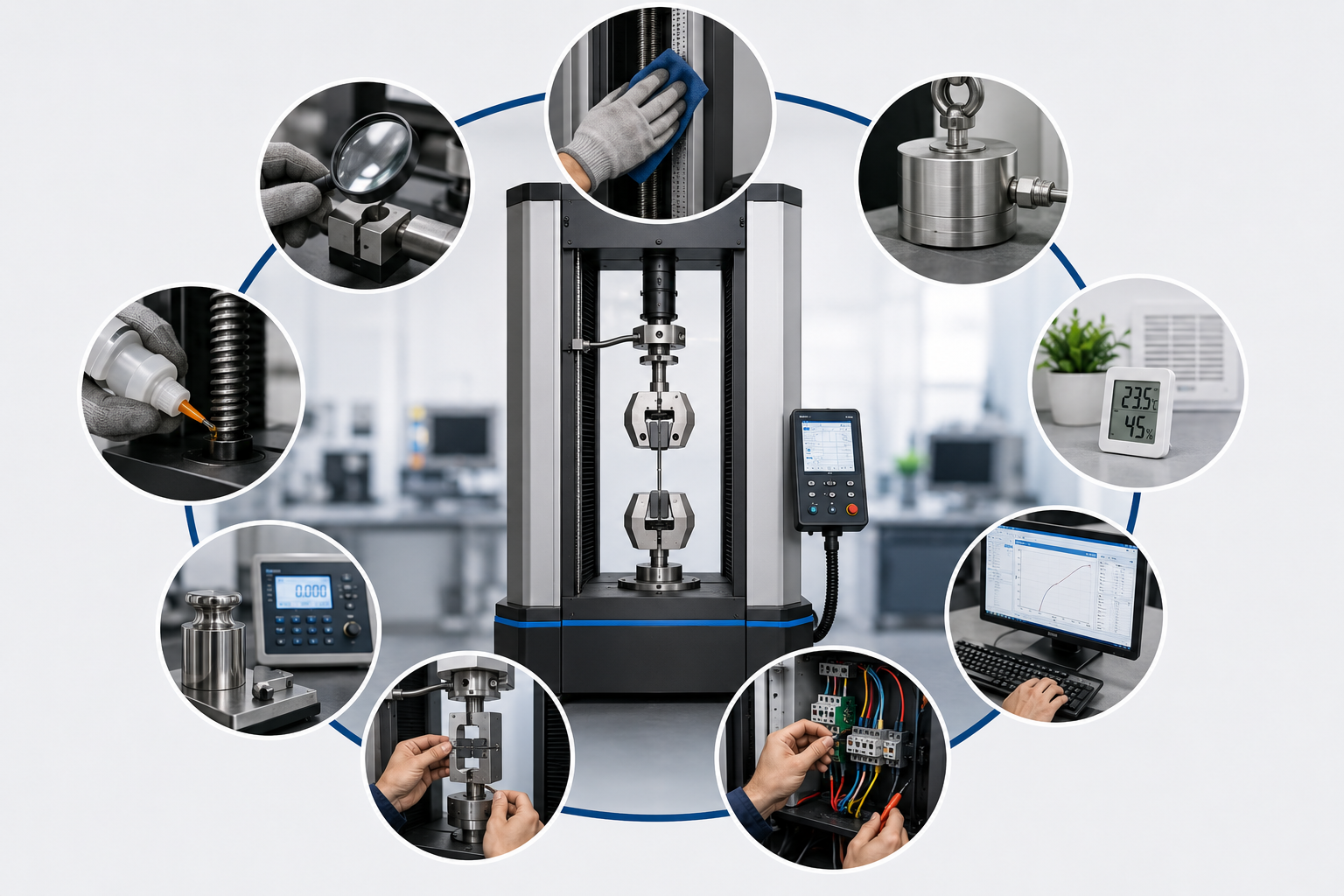
Universal Testing Machines (UTMs) are essential instruments used for evaluating the mechanical properties of materials across industries such as manufacturing, construction, automotive, aerospace, research, and quality control. These machines are designed to deliver highly accurate and repeatable testing results, making them a critical part of product development and quality assurance processes. However, like any precision equipment, a Universal Testing Machine requires regular care and maintenance to ensure optimal performance, long-term reliability, and measurement accuracy. Preventive maintenance plays a crucial role in reducing downtime, minimizing repair costs, extending equipment life, and ensuring consistent testing results.
One of the most important aspects of preventive maintenance is conducting regular visual inspections. Operators should routinely examine the machine for signs of wear, damage, loose components, unusual noises, or visible contamination. Even minor issues such as loose bolts, worn grips, damaged cables, or misaligned fixtures can gradually affect machine performance if left unaddressed. Early detection of potential problems allows corrective action to be taken before they develop into major failures that could disrupt testing operations.
Keeping the machine clean is another fundamental maintenance practice. Dust, dirt, grease, and debris can accumulate on machine surfaces, moving components, sensors, and electronic systems over time. Excessive contamination may interfere with mechanical movement and affect measurement accuracy. Regular cleaning helps maintain smooth operation and prevents foreign particles from causing premature wear. Operators should follow manufacturer recommendations regarding cleaning methods and use appropriate materials that will not damage machine components or sensitive electronic systems.
Proper lubrication is essential for maintaining the performance of mechanical components within a Universal Testing Machine. Moving parts such as guide columns, screws, bearings, and drive systems require adequate lubrication to minimize friction and reduce wear. Insufficient lubrication can result in increased mechanical resistance, inconsistent movement, and accelerated component deterioration. Establishing a routine lubrication schedule based on manufacturer guidelines helps ensure smooth operation and extends the lifespan of critical machine parts.
Calibration is one of the most important preventive maintenance activities for maintaining testing accuracy. Over time, measurement systems can experience slight variations due to usage, environmental conditions, and normal wear. Regular calibration ensures that load cells, displacement sensors, extensometers, and other measurement devices continue to operate within specified accuracy limits. Calibration should be performed by qualified personnel using certified reference standards to maintain confidence in test results and support compliance with industry requirements.
The load cell deserves special attention during maintenance programs because it is responsible for measuring the force applied during testing. Load cells are highly sensitive instruments that can be affected by overloading, impact damage, improper handling, or environmental factors. Operators should inspect load cells regularly for signs of damage and verify that they are functioning correctly. Avoiding overload situations and following proper testing procedures helps protect these critical components and preserve measurement accuracy.
Testing grips and fixtures should also be inspected on a routine basis. These accessories experience repeated loading and may gradually wear over time. Damaged or worn grips can cause specimen slippage, uneven loading, and inaccurate testing results. Similarly, worn fixtures may affect alignment and compromise test integrity. Regular inspection, cleaning, and replacement of worn accessories help ensure consistent testing conditions and improve result reliability.
Electrical systems and connections are another important area of preventive maintenance. Modern Universal Testing Machines rely on advanced electronics, sensors, controllers, and software systems to perform accurate testing. Loose connections, damaged cables, power fluctuations, or electrical faults can affect machine performance and lead to unexpected downtime. Routine inspection of electrical components helps identify potential issues before they disrupt operations. Maintaining stable power conditions and protecting equipment from electrical surges further enhances system reliability.
Software maintenance is becoming increasingly important as testing systems continue to evolve technologically. Many modern Universal Testing Machines utilize sophisticated software for machine control, data acquisition, analysis, and reporting. Regular software updates help improve functionality, enhance security, fix known issues, and maintain compatibility with evolving operating environments. Backing up testing data and verifying software settings periodically helps protect valuable information and ensures uninterrupted operation.
Environmental conditions can significantly influence the performance of a Universal Testing Machine. Extreme temperatures, excessive humidity, dust, vibration, and corrosive environments can negatively affect both mechanical and electronic components. Maintaining a clean, controlled testing environment helps reduce environmental stress on the machine and contributes to improved accuracy and reliability. Organizations should ensure that testing equipment is installed in locations that meet manufacturer recommendations regarding operating conditions.
A structured preventive maintenance program provides significant long-term benefits for organizations that rely on material testing. Regular inspections, cleaning, lubrication, calibration, component verification, software maintenance, and environmental control help reduce unexpected failures and maintain consistent testing performance. By investing time and resources into preventive maintenance, businesses can extend equipment lifespan, improve operational efficiency, protect testing accuracy, and minimize costly repairs. As quality standards continue to become more demanding across industries, maintaining Universal Testing Machines in peak condition remains essential for delivering dependable results and supporting successful quality assurance programs.