A Universal Testing Machine (UTM) is one of the most important pieces of equipment used in material testing and quality control. It is designed to evaluate the mechanical properties of materials by applying controlled forces and measuring how the material responds under different testing conditions. Industries across the world rely on Universal Testing Machines to determine the strength, durability, flexibility, and overall performance of materials before they are used in real-world applications. Whether it is a steel component used in construction, a plastic product used in manufacturing, or a composite material used in aerospace applications, understanding how a material behaves under load is essential for ensuring quality, safety, and reliability.
The term “universal” refers to the machine’s ability to perform multiple types of tests using a single testing system. Unlike specialized machines that are designed for only one type of test, a Universal Testing Machine can perform tensile testing, compression testing, bend testing, shear testing, and several other testing procedures depending on the fixtures and accessories used. This versatility makes UTM machines a preferred choice for laboratories, educational institutions, manufacturing facilities, research centers, and quality assurance departments. By conducting various tests on different materials, organizations can accurately assess product performance and verify compliance with industry standards.
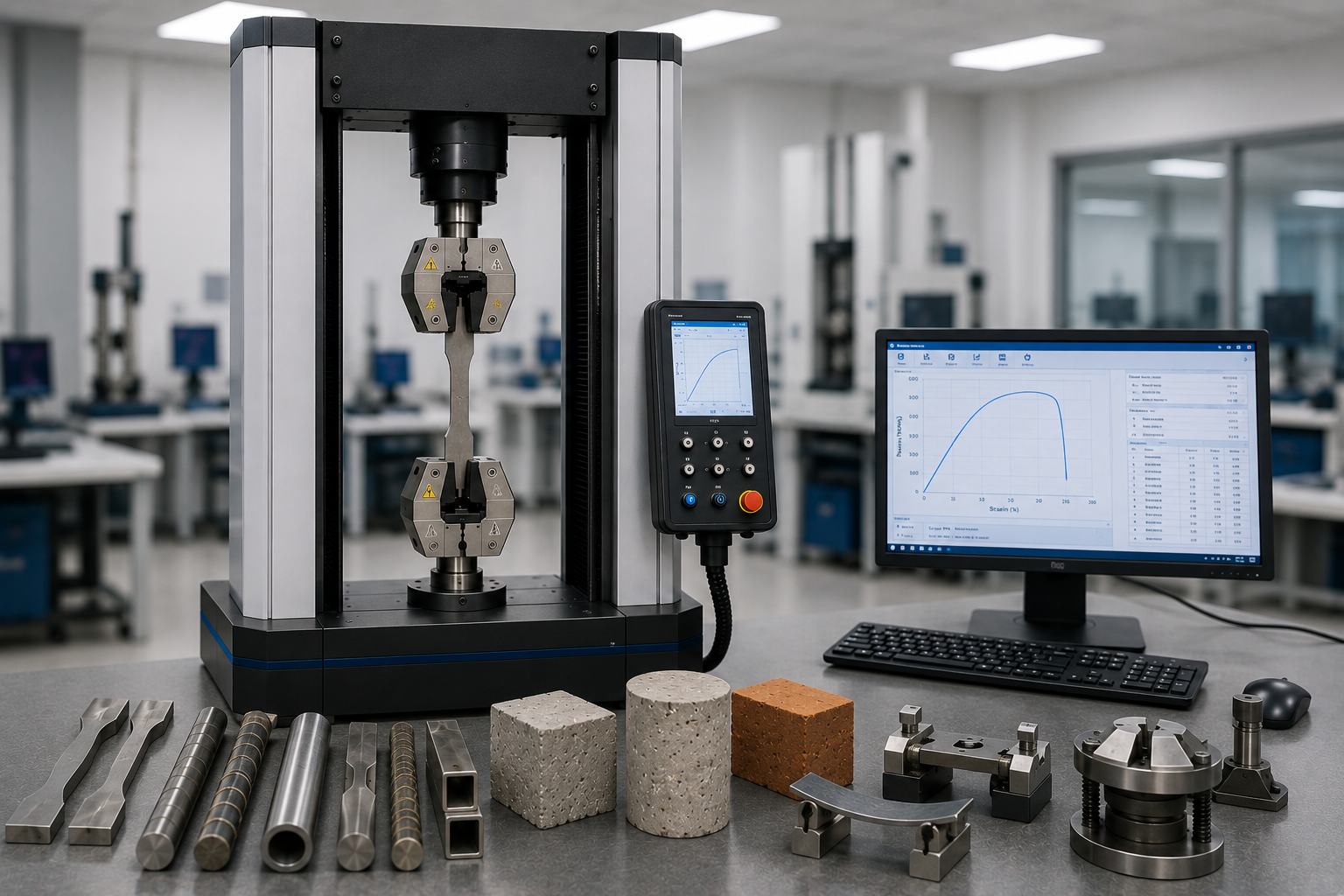
A Universal Testing Machine operates by applying a controlled load to a specimen while continuously measuring force and deformation. During a test, the specimen is securely held between grips or fixtures, and the machine gradually applies force until a predefined condition is achieved or the specimen fails. Throughout the testing process, advanced sensors and software record valuable data such as maximum load, yield strength, tensile strength, elongation, compression resistance, and deformation characteristics. This information helps engineers and quality professionals understand how a material will perform under actual service conditions.
One of the most common applications of a Universal Testing Machine is tensile testing. Tensile testing is performed to determine how a material reacts when it is pulled apart. The test provides valuable information about tensile strength, yield point, elongation, and ductility. Manufacturers use these results to ensure that materials meet the required specifications and performance standards. Tensile testing is widely used for metals, plastics, rubber, textiles, wires, and composite materials. The data obtained from tensile tests plays a crucial role in product development, quality assurance, and material selection processes.
Compression testing is another important application of Universal Testing Machines. In this type of test, the material is subjected to compressive forces to evaluate its ability to withstand crushing or deformation under load. Compression testing is commonly performed on concrete, cement products, construction materials, packaging materials, and various industrial components. The results help engineers determine whether a material can safely handle the loads and pressures it may encounter during actual use. In industries such as construction and infrastructure development, compression testing is essential for maintaining structural integrity and ensuring long-term durability.
Universal Testing Machines are widely used across numerous industries because material performance directly impacts product quality and safety. In the automotive industry, manufacturers use UTM machines to test vehicle components and materials to ensure they can withstand operational stresses. In the construction industry, UTM testing helps verify the strength of building materials such as steel, concrete, and reinforcement bars. Aerospace companies use advanced testing procedures to evaluate lightweight materials that must perform reliably under extreme conditions. Research institutions and educational organizations utilize UTM machines for scientific studies, material development, and engineering education.
Modern Universal Testing Machines have evolved significantly with advancements in technology. Today’s machines are equipped with digital controllers, computerized data acquisition systems, user-friendly software, and automated testing capabilities. These features improve testing accuracy, reduce human error, and simplify data analysis. Operators can generate detailed reports, visualize stress-strain curves, and store test data for future reference. Advanced software solutions also allow users to conduct tests according to international standards and customize testing parameters based on specific requirements.
The importance of Universal Testing Machines extends beyond quality control. These machines help organizations improve product performance, reduce manufacturing defects, enhance customer satisfaction, and maintain regulatory compliance. By identifying weaknesses in materials before products reach the market, manufacturers can avoid costly failures and improve overall reliability. Material testing also supports innovation by allowing engineers to evaluate new materials and optimize product designs for better performance and efficiency.
As industries continue to demand higher quality standards and more reliable products, the role of Universal Testing Machines becomes increasingly significant. From routine quality checks to advanced research applications, UTM machines provide the accurate and dependable data needed for informed decision-making. Their ability to perform multiple testing functions, deliver precise measurements, and support industry-standard testing procedures makes them an indispensable tool for organizations focused on quality, safety, and continuous improvement. For businesses seeking dependable material testing solutions, a Universal Testing Machine remains one of the most valuable investments for ensuring product excellence and long-term success.