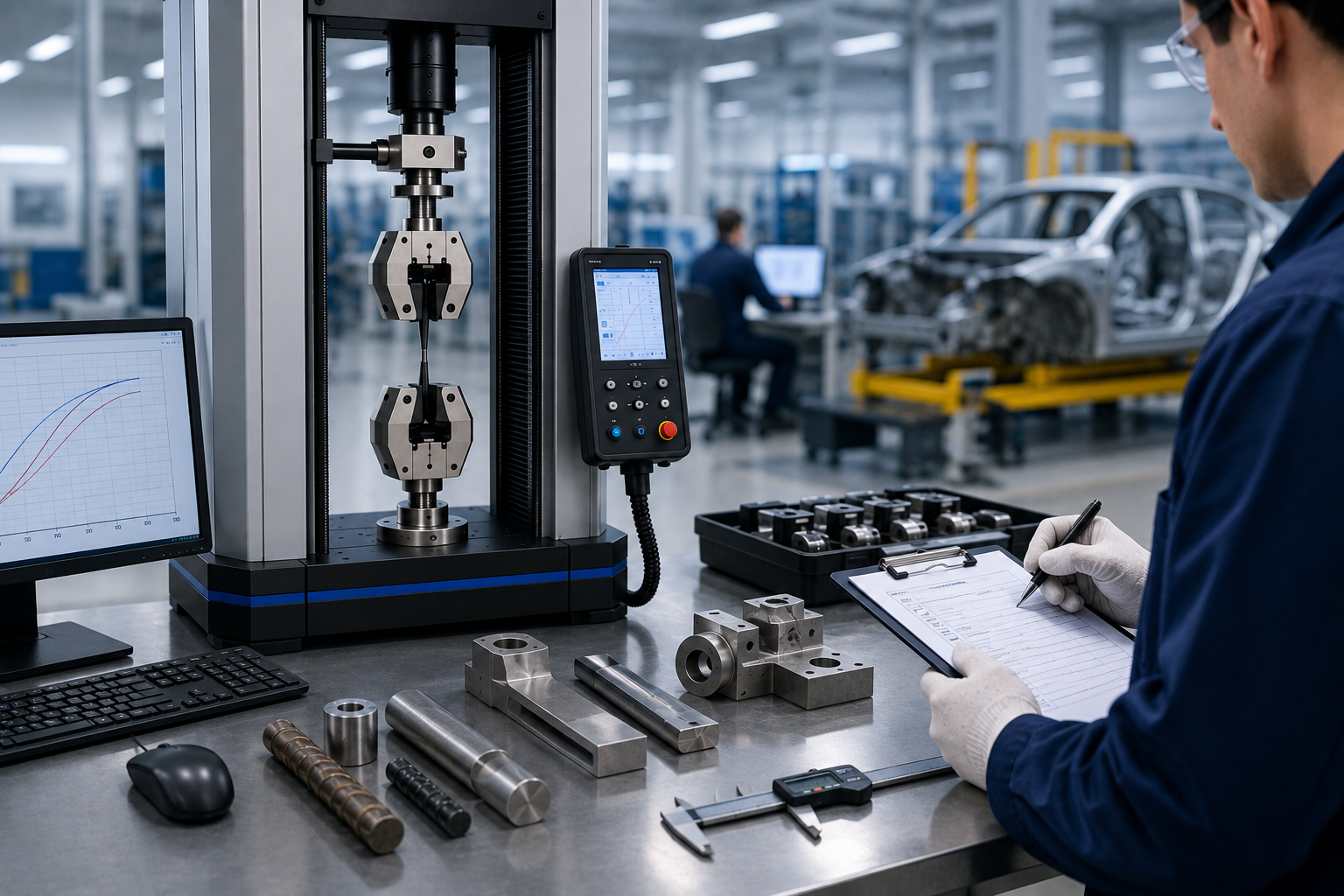
Quality control is one of the most important aspects of modern manufacturing and industrial production. Businesses across various sectors continuously strive to ensure that their products meet performance expectations, comply with industry standards, and satisfy customer requirements. To achieve these objectives, accurate material testing becomes essential, and one of the most effective tools used for this purpose is the Universal Testing Machine (UTM). By providing reliable data on the mechanical properties of materials and components, Universal Testing Machines help organizations maintain consistent product quality, reduce failures, and improve overall operational efficiency.
One of the primary benefits of using a Universal Testing Machine in quality control is the ability to verify material strength and performance before products reach the market. Raw materials often vary in quality due to differences in manufacturing processes, suppliers, and environmental conditions. Through tensile, compression, bending, and other testing methods, a UTM helps determine whether materials meet the required specifications. This verification process ensures that only suitable materials are used in production, reducing the risk of defects and improving product reliability.
Consistency is another major advantage offered by Universal Testing Machines. Maintaining consistent quality across multiple production batches can be challenging, especially in industries that manufacture large volumes of products. A UTM enables manufacturers to perform routine testing on samples taken from production lines, ensuring that every batch meets the same quality standards. Consistent testing procedures help identify variations early, allowing corrective actions to be taken before significant quality issues develop.
Universal Testing Machines also play a critical role in identifying product weaknesses during the development and manufacturing stages. Even well-designed products can contain hidden flaws that may not be visible during visual inspections. Mechanical testing reveals how materials behave under real-world loading conditions and helps engineers detect weaknesses that could lead to failure. By identifying these issues early, manufacturers can make necessary design improvements and prevent costly product recalls or warranty claims.
Another important benefit of UTM testing is its contribution to compliance with industry standards and regulatory requirements. Many industries operate under strict quality and safety regulations that require products to undergo specific testing procedures before approval. Universal Testing Machines help organizations perform tests according to recognized standards and generate documented evidence of compliance. This documentation is often required during audits, certifications, and customer inspections, making UTM testing an essential part of quality assurance programs.
Product safety is closely linked to quality control, and Universal Testing Machines help ensure that products can withstand expected operating conditions without failure. Components used in automotive, aerospace, construction, medical, and industrial applications must perform reliably throughout their service life. By evaluating mechanical properties such as tensile strength, compression resistance, and deformation characteristics, UTMs help manufacturers confirm that products meet safety requirements and can operate as intended under normal and extreme conditions.
The use of Universal Testing Machines also supports cost reduction and improved manufacturing efficiency. Detecting material defects or production inconsistencies early in the manufacturing process prevents defective products from progressing through later production stages. Early detection reduces material waste, minimizes rework, lowers production costs, and improves overall operational productivity. Investing in effective testing procedures often results in substantial long-term savings by preventing expensive failures and quality-related issues.
Customer satisfaction is another area where Universal Testing Machines provide significant value. Customers expect products to perform reliably and consistently, regardless of the industry. Products that fail prematurely can damage a company’s reputation and lead to lost business opportunities. By implementing comprehensive quality control programs supported by UTM testing, manufacturers can deliver products that consistently meet customer expectations. Reliable product performance strengthens customer confidence and helps build long-term business relationships.
Universal Testing Machines are also valuable tools for supplier quality management. Many manufacturers source raw materials and components from multiple suppliers, making it important to verify incoming material quality. UTM testing allows organizations to evaluate supplier materials and ensure they meet required performance specifications before being accepted into production. This process helps maintain consistent quality throughout the supply chain and reduces the risk of production disruptions caused by substandard materials.
Modern Universal Testing Machines provide advanced software capabilities that further enhance quality control operations. Digital data collection, automated report generation, graphical analysis, and secure data storage improve testing accuracy and simplify documentation processes. Quality managers can quickly access testing records, analyze trends, and generate reports for audits and management reviews. These capabilities support data-driven decision-making and contribute to continuous improvement initiatives within the organization.
As industries continue to emphasize quality, safety, and customer satisfaction, the role of Universal Testing Machines in quality control becomes increasingly important. Their ability to provide accurate, repeatable, and reliable testing data helps manufacturers maintain high standards while improving efficiency and reducing risks. Whether used for raw material inspection, product development, production monitoring, or compliance verification, Universal Testing Machines remain one of the most valuable tools for ensuring product excellence. Organizations that integrate UTM testing into their quality control processes gain a competitive advantage by delivering safer, stronger, and more dependable products to the market.