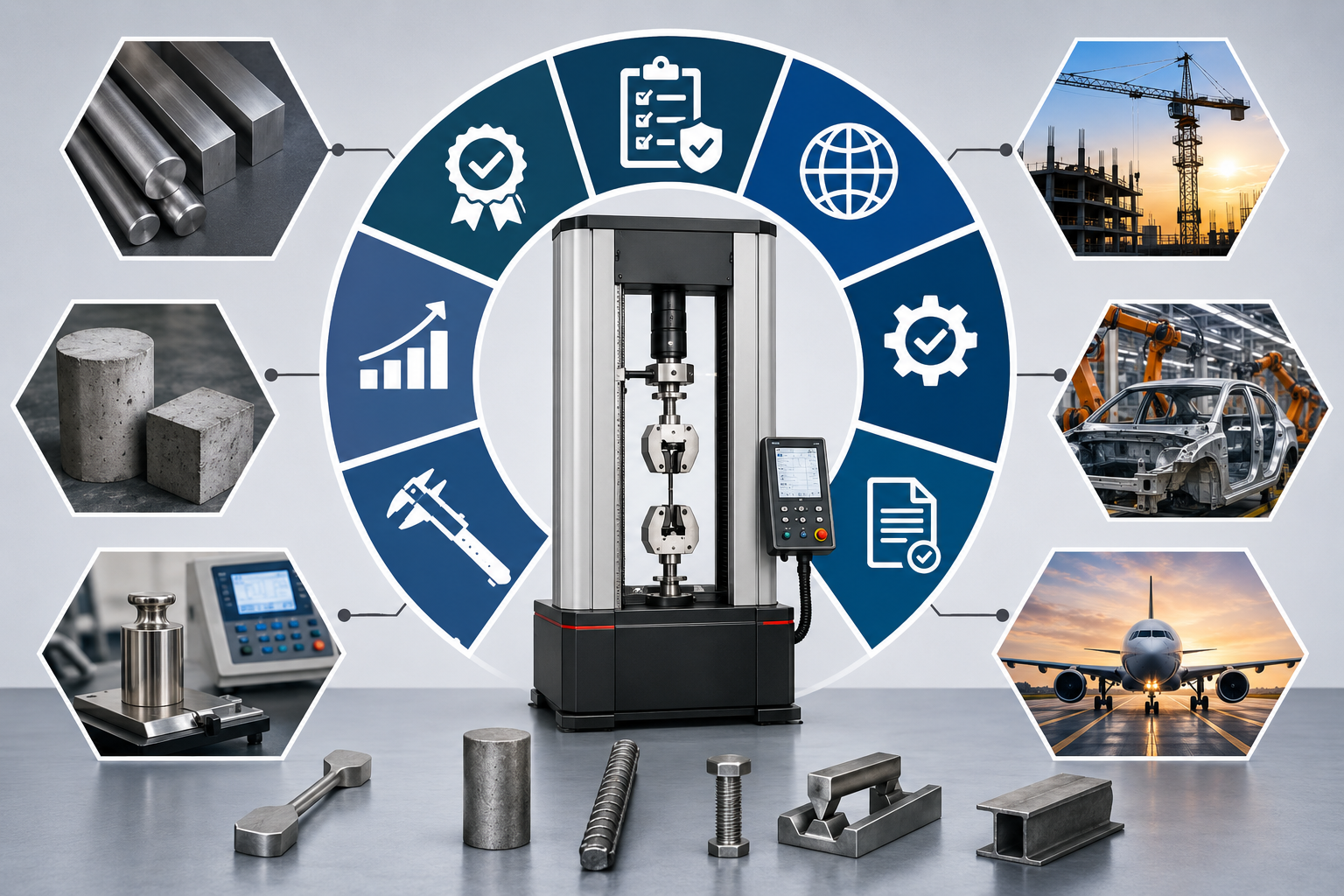
Universal Testing Machines (UTMs) play a crucial role in evaluating the mechanical properties of materials used across numerous industries, including construction, automotive, aerospace, manufacturing, research, and quality assurance. While the testing capabilities of a Universal Testing Machine are highly advanced, the reliability and acceptance of testing results largely depend on adherence to recognized industry standards. These standards provide detailed guidelines regarding specimen preparation, testing procedures, equipment requirements, data interpretation, and reporting methods. By following established standards, organizations can ensure consistency, accuracy, repeatability, and global acceptance of their testing results.
Industry standards serve as a common framework that allows manufacturers, laboratories, researchers, and regulatory bodies to evaluate materials using the same testing methodologies. Without standardized procedures, testing results could vary significantly between different organizations, making it difficult to compare material performance or verify compliance. Standards eliminate uncertainty by defining exact testing conditions, measurement techniques, specimen dimensions, loading rates, and reporting formats. As a result, materials tested in one laboratory can be accurately compared with materials tested elsewhere, ensuring confidence in the results.
One of the most widely recognized organizations responsible for material testing standards is ASTM International. ASTM develops technical standards that are used globally for testing metals, plastics, composites, rubber, construction materials, and various engineering products. Many Universal Testing Machine applications follow ASTM standards because they provide detailed guidance for tensile, compression, flexural, shear, and other mechanical tests. ASTM standards help organizations maintain consistent testing procedures and support quality assurance efforts across multiple industries.
Another major standards organization is the International Organization for Standardization (ISO). ISO standards are internationally accepted and are frequently used by manufacturers, testing laboratories, certification bodies, and research institutions. ISO standards establish uniform testing procedures that help facilitate international trade and product certification. Companies seeking global market acceptance often perform material testing according to ISO requirements to demonstrate compliance with recognized international quality benchmarks.
In the construction industry, material testing standards are particularly important because structural safety depends heavily on the performance of tested materials. Steel reinforcement bars, concrete specimens, cement products, fasteners, and structural components must undergo testing according to established standards before being approved for use. These standards help ensure that construction materials meet required strength and durability criteria, contributing to safer buildings, bridges, roads, and infrastructure projects. Universal Testing Machines are extensively used to perform these evaluations while following prescribed testing methods.
The automotive industry also relies heavily on standardized testing procedures. Vehicle manufacturers must verify the performance of metals, plastics, composites, fasteners, safety components, and structural assemblies. Material testing conducted according to recognized standards helps ensure product reliability, occupant safety, and regulatory compliance. By using Universal Testing Machines in accordance with industry standards, automotive companies can validate product performance and maintain consistent manufacturing quality across large production volumes.
Aerospace applications demand some of the highest levels of testing precision and regulatory compliance. Aircraft and aerospace components operate under extreme conditions and are subject to rigorous safety requirements. Material testing standards help aerospace manufacturers evaluate the mechanical performance of lightweight alloys, advanced composites, structural materials, and critical components. Compliance with recognized testing procedures ensures that materials can safely withstand operational stresses while meeting stringent industry expectations.
Standardized testing procedures also provide significant benefits for quality control and product development activities. Manufacturers use testing standards to establish acceptance criteria, compare material performance, evaluate supplier quality, and validate product designs. Consistent testing methodologies allow organizations to identify trends, improve manufacturing processes, and make informed decisions regarding material selection. This contributes directly to improved product quality, reduced defects, and enhanced customer satisfaction.
Calibration and equipment verification standards are equally important in Universal Testing Machine operations. Accurate testing results depend not only on proper testing procedures but also on the accuracy of the testing equipment itself. Standards related to calibration ensure that load cells, displacement sensors, extensometers, and other measurement systems operate within specified tolerances. Regular calibration and verification activities help maintain confidence in test data and support compliance with quality management systems.
Documentation and reporting requirements are another key aspect of industry standards. Testing standards often specify the information that must be recorded and included in final test reports. This may include specimen details, testing conditions, load values, displacement measurements, stress-strain data, environmental conditions, and calculated results. Comprehensive documentation supports traceability, regulatory compliance, audits, certifications, and customer verification activities. Standardized reporting also improves communication between manufacturers, suppliers, laboratories, and regulatory authorities.
As industries continue to evolve and quality expectations become increasingly demanding, adherence to recognized testing standards remains essential for successful material evaluation. Universal Testing Machines provide the technology needed to perform accurate and repeatable testing, but industry standards provide the framework that ensures those results are meaningful and globally accepted. By following established standards, organizations can improve product quality, maintain compliance, enhance customer confidence, and support continuous improvement efforts. In today’s competitive industrial environment, standardized material testing is not only a quality requirement but also a critical component of long-term business success and product reliability.