
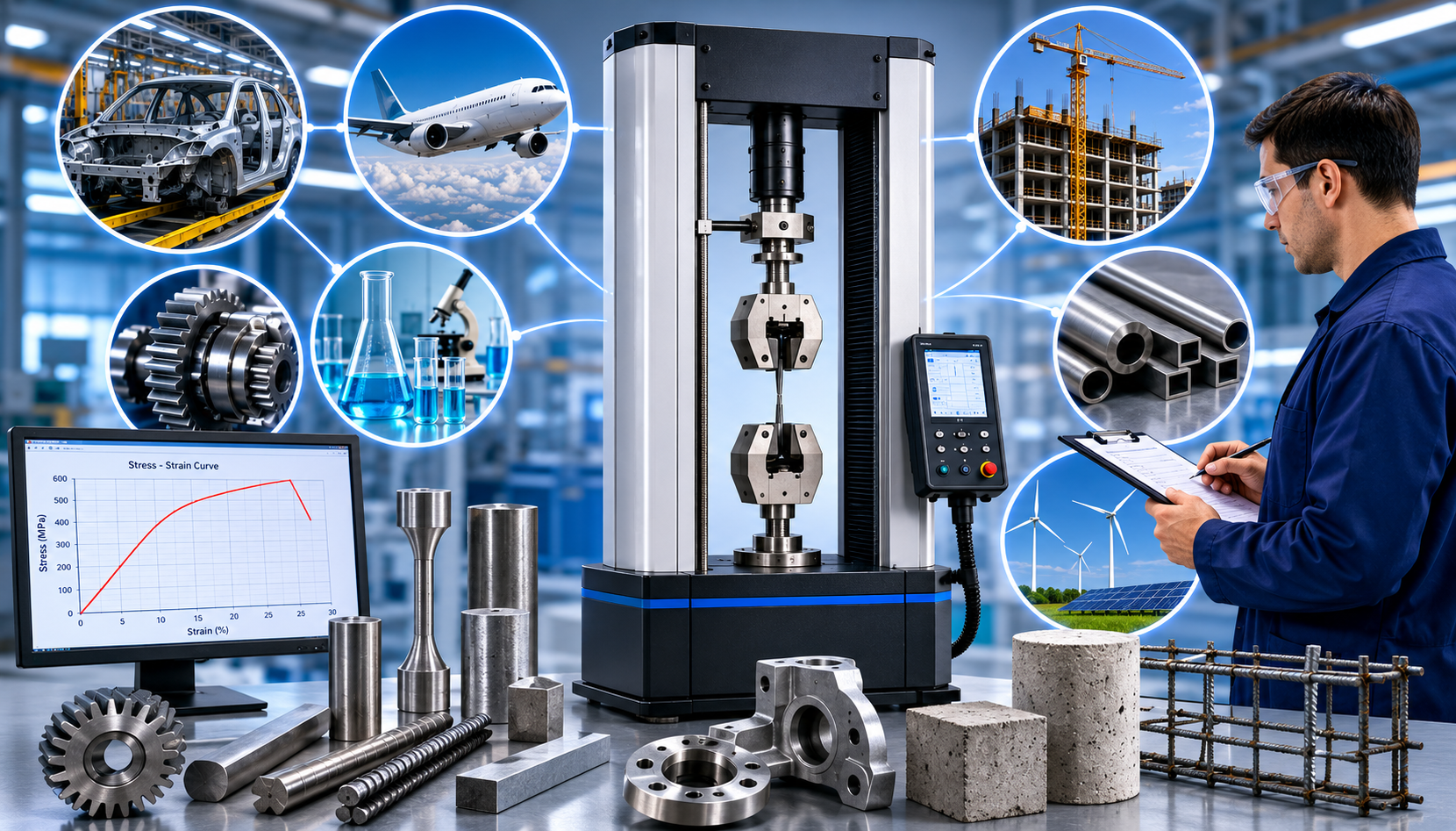
Material testing has become an essential part of modern manufacturing industries where product quality, reliability, safety, and performance are critical to business success. In today’s highly competitive industrial environment, manufacturers are expected to produce products that meet strict quality standards while maintaining consistency across large production volumes. Regardless of whether a company manufactures automotive components, construction materials, machinery parts, consumer products, aerospace equipment, or industrial goods, the quality of the final product depends heavily on the properties and performance of the materials used during production. Material testing provides valuable insights into these properties and helps manufacturers make informed decisions throughout the production process.
The primary objective of material testing is to evaluate how a material behaves under different conditions and loads. Materials may appear visually acceptable while still containing weaknesses that can affect product performance. Through testing procedures such as tensile testing, compression testing, bend testing, impact testing, and hardness testing, manufacturers can accurately assess mechanical properties including strength, flexibility, durability, toughness, and resistance to deformation. Understanding these characteristics helps ensure that materials are suitable for their intended applications and capable of performing reliably under real-world operating conditions.
One of the most significant benefits of material testing in manufacturing industries is quality assurance. Manufacturers must consistently produce products that meet customer expectations and industry requirements. Even minor variations in material composition or production processes can lead to significant differences in product performance. Material testing helps identify these variations before products reach the market. By evaluating raw materials, in-process components, and finished products, manufacturers can detect defects early, reduce quality-related issues, and maintain consistent production standards.
Product safety is another critical reason why material testing is indispensable in manufacturing. Many products are subjected to demanding operating environments where failure can result in financial losses, equipment damage, or safety hazards. Automotive components, structural materials, industrial machinery, medical devices, and aerospace products all require rigorous testing to ensure reliability. Material testing allows manufacturers to verify that products can withstand expected loads, stresses, and environmental conditions throughout their service life. This verification process helps minimize risks and contributes to safer products for end users.
Material testing also plays a crucial role in product development and innovation. Manufacturers continuously seek to improve product performance, reduce costs, and introduce new technologies. During the development process, engineers must evaluate different materials and design options to identify the most effective solutions. Testing provides objective data that supports material selection, design optimization, and performance evaluation. By understanding how materials behave under various conditions, manufacturers can develop stronger, lighter, more efficient, and more durable products that meet evolving market demands.
Another important advantage of material testing is its contribution to regulatory compliance and industry standards. Many industries operate under strict quality regulations and technical specifications that require products and materials to undergo specific testing procedures. Compliance with these standards is often mandatory before products can be sold or used in critical applications. Material testing generates documented evidence that demonstrates conformity with applicable requirements. This documentation is essential for certifications, audits, inspections, and customer approvals, helping manufacturers maintain credibility and market access.
Cost reduction is often an overlooked benefit of material testing, but it has a significant impact on manufacturing efficiency. Identifying material defects during the early stages of production is far less expensive than dealing with failures after products have been shipped to customers. Material testing helps reduce waste, minimize rework, prevent recalls, and lower warranty costs. By detecting issues before they escalate into larger problems, manufacturers can improve productivity and protect profitability while maintaining high-quality standards.
Supply chain management also benefits from effective material testing programs. Many manufacturers source raw materials and components from multiple suppliers, making quality verification an important part of procurement activities. Material testing helps ensure that incoming materials meet specified requirements before they enter production. This process reduces the risk of production disruptions caused by substandard materials and helps maintain consistency throughout the manufacturing process. Strong supplier quality management contributes directly to better product performance and customer satisfaction.
Modern manufacturing industries increasingly rely on advanced testing technologies to support data-driven decision-making. Universal Testing Machines, hardness testers, impact testers, and other testing equipment provide highly accurate measurements that help manufacturers monitor quality trends and continuously improve processes. Digital testing systems allow organizations to collect, analyze, and store testing data efficiently, creating valuable insights that support operational excellence and long-term business growth.
As customer expectations continue to rise and industries demand higher levels of quality and reliability, the importance of material testing becomes even more significant. It serves as the foundation of quality assurance, product safety, innovation, compliance, and operational efficiency. Manufacturers that invest in comprehensive material testing programs are better positioned to deliver dependable products, maintain competitive advantages, and achieve sustainable success. By ensuring that materials meet performance requirements before they are used in production, material testing helps create products that are safer, stronger, more reliable, and capable of meeting the challenges of modern industrial applications.