
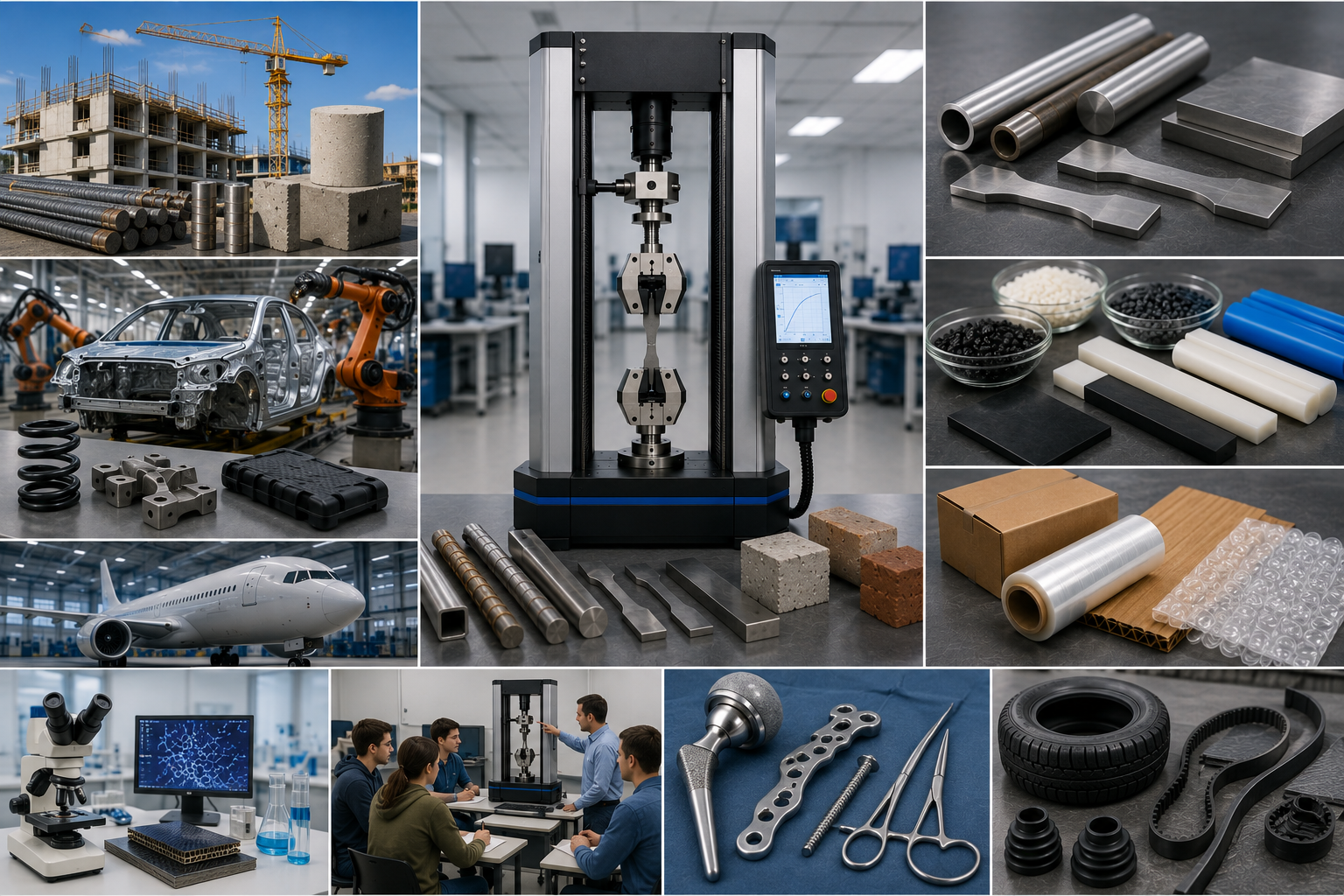
Universal Testing Machines (UTMs) play a vital role in modern manufacturing, research, quality control, and product development processes. These machines are designed to evaluate the mechanical properties of materials by applying controlled tensile, compression, bending, and other types of loads. Because of their versatility and ability to perform multiple testing procedures, Universal Testing Machines have become an essential part of industries that depend on material performance, safety, durability, and compliance with quality standards. From construction and automotive manufacturing to aerospace engineering and educational research, UTMs help organizations make informed decisions based on accurate testing data.
One of the most significant applications of Universal Testing Machines can be found in the construction and infrastructure industry. Materials such as steel reinforcement bars, concrete specimens, structural components, fasteners, and construction materials must meet strict performance requirements before being used in buildings, bridges, highways, and industrial structures. Universal Testing Machines help engineers evaluate tensile strength, compression resistance, and load-bearing capacity to ensure that materials can withstand the stresses they will experience during service. Accurate testing not only improves structural safety but also helps organizations comply with national and international construction standards.
The automotive industry is another major sector that relies heavily on Universal Testing Machines. Modern vehicles contain thousands of components manufactured from metals, plastics, composites, rubber materials, and engineered alloys. Each component must be tested to ensure durability, reliability, and safety under varying operating conditions. UTM testing is used to evaluate the strength of metal parts, performance of seatbelt materials, durability of plastic components, and mechanical properties of various automotive systems. By identifying weaknesses before production, manufacturers can improve vehicle safety, reduce failures, and maintain consistent product quality.
In the aerospace industry, material testing is even more critical due to the demanding environments in which aircraft and spacecraft operate. Aerospace engineers use Universal Testing Machines to evaluate lightweight alloys, advanced composites, structural materials, and specialized components that must withstand extreme forces, temperature fluctuations, and long-term operational stress. The testing data generated by UTMs helps ensure that materials meet stringent aerospace requirements while maintaining optimal performance and safety. Since even minor material defects can have serious consequences in aerospace applications, accurate testing remains a fundamental part of quality assurance processes.
Manufacturing and engineering industries also depend on Universal Testing Machines for routine quality control and product development activities. Manufacturers use UTM testing to verify that raw materials, finished products, and production components meet specified performance standards. Mechanical properties such as tensile strength, yield strength, elongation, hardness, and compression resistance are carefully evaluated to ensure product consistency. The testing process helps reduce production defects, improve customer satisfaction, and support continuous improvement initiatives within manufacturing operations.
The metal and steel industry represents one of the largest users of Universal Testing Machines worldwide. Steel manufacturers and metal processing companies must continuously verify the quality and performance of their products before they reach customers. Tensile and compression tests help determine whether materials possess the required strength and flexibility for specific applications. UTM testing is commonly performed on structural steel, stainless steel, aluminum alloys, copper materials, metal rods, sheets, wires, and fabricated components. The information obtained from testing helps ensure that products meet industry specifications and can perform reliably under actual service conditions.
Plastic and polymer manufacturers also benefit significantly from Universal Testing Machines. Modern industries increasingly rely on plastic materials for packaging, consumer products, automotive components, medical devices, and industrial applications. Different plastic materials exhibit varying levels of strength, flexibility, and resistance to deformation. UTM testing helps manufacturers evaluate these properties and select the most suitable materials for their products. By understanding how plastics respond to different loading conditions, manufacturers can improve product design, increase durability, and optimize material performance.
Research institutions and educational organizations utilize Universal Testing Machines extensively for scientific investigations and engineering education. Universities, technical institutes, and research laboratories use UTMs to study material behavior, develop new materials, and conduct experimental research projects. Engineering students gain practical experience by performing tensile, compression, and bending tests while learning fundamental principles of material science and structural mechanics. The data generated during testing contributes to innovation, technological advancement, and a deeper understanding of material performance.
The packaging industry also relies on Universal Testing Machines to evaluate the strength and durability of packaging materials. Cardboard boxes, plastic containers, flexible packaging films, and protective materials must be capable of withstanding transportation, storage, and handling conditions without failure. UTM testing helps determine compression strength, tear resistance, puncture resistance, and overall packaging performance. These tests allow manufacturers to improve packaging designs while reducing material waste and ensuring product protection.
Medical device manufacturers use Universal Testing Machines to verify the mechanical performance of implants, surgical instruments, medical tubing, and other healthcare products. Because patient safety depends on product reliability, these devices must undergo rigorous testing before approval and market release. Universal Testing Machines provide accurate data that helps manufacturers meet regulatory requirements and maintain high quality standards throughout the production process.
As industries continue to demand greater reliability, safety, and product performance, the importance of Universal Testing Machines continues to grow. Their ability to perform multiple testing procedures on a wide variety of materials makes them one of the most valuable tools in modern quality assurance and research environments. By providing precise measurements and dependable testing results, Universal Testing Machines help organizations improve products, reduce risks, maintain compliance, and drive innovation across countless industrial sectors. Whether used for construction materials, automotive components, aerospace structures, plastics, metals, or advanced research projects, UTMs remain a cornerstone of modern material testing and quality evaluation.